
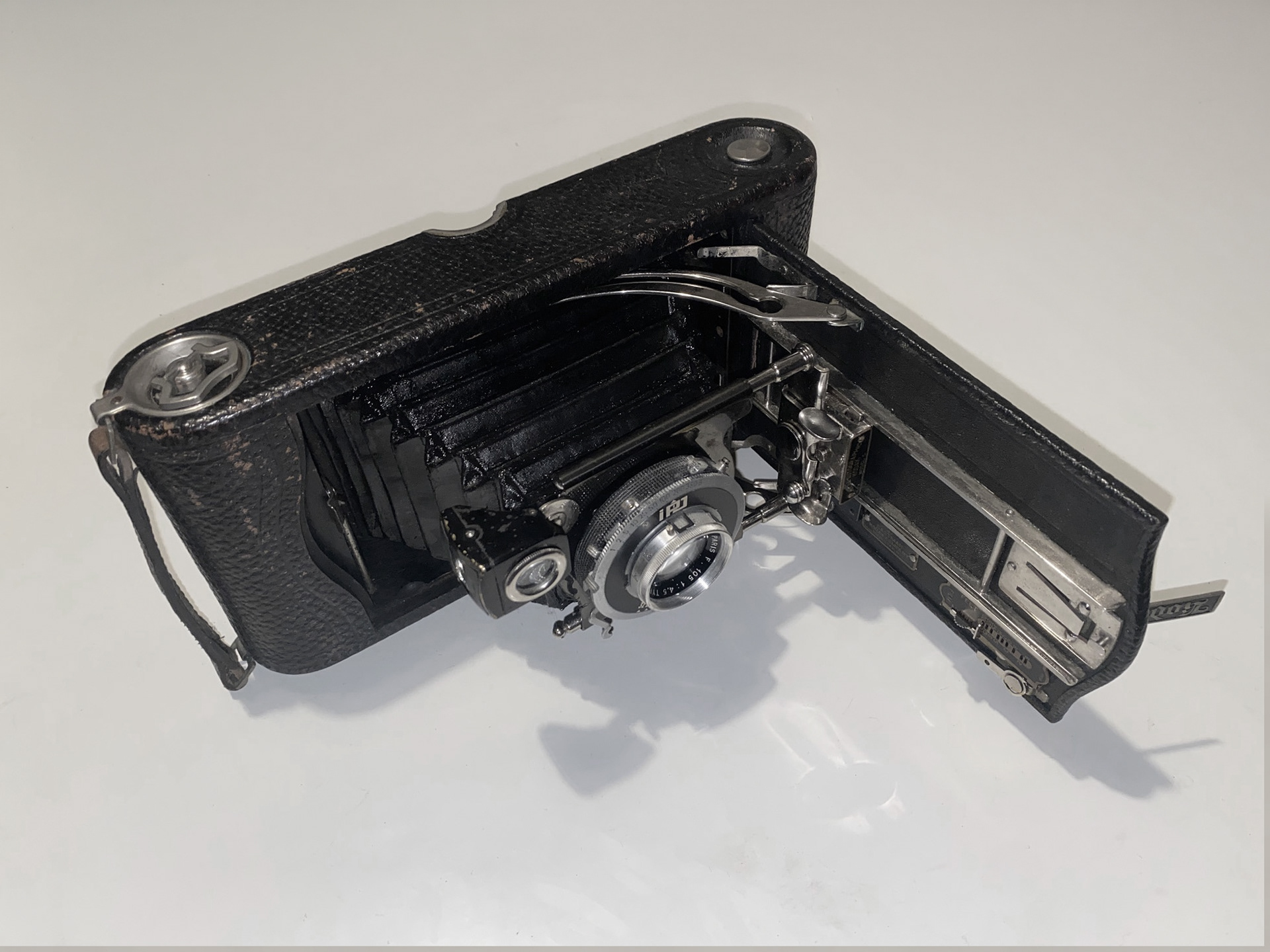
Kodak No. 3-A Model C modified for 120 film and 6x14 panoramas
The Kodak No. 3-A Model C Autographic is the largest folding camera I own, and it immediately stands apart because of its size, presence, and original purpose. It was designed for 122 film, producing large postcard-sized negatives of approximately 8.25 x 13.97 cm. Even before making any modifications, it already feels like a camera from another era in the best possible way: oversized, mechanical, and full of possibility.
What drew me to this camera was not only its history, but also the idea that it could be adapted into an affordable and very usable 6x14 panorama camera. There is something deeply satisfying about giving an old camera a second life, especially when the result opens up a new way of working with film.
Why convert a Kodak No. 3-A Model C to 120 film?
For anyone interested in panoramic film photography, the Kodak No. 3-A Model C offers an appealing starting point. With a 122 to 120 film adapter, it becomes one of the more accessible ways to shoot 6x14 panoramas on 120 film without stepping into much more expensive dedicated panorama systems.
That is part of the charm for me. This is not a conversion done for perfection or convenience. It is done for curiosity, experimentation, and the pleasure of making something old useful again. The camera keeps its original character, but the modification gives it a new photographic purpose.
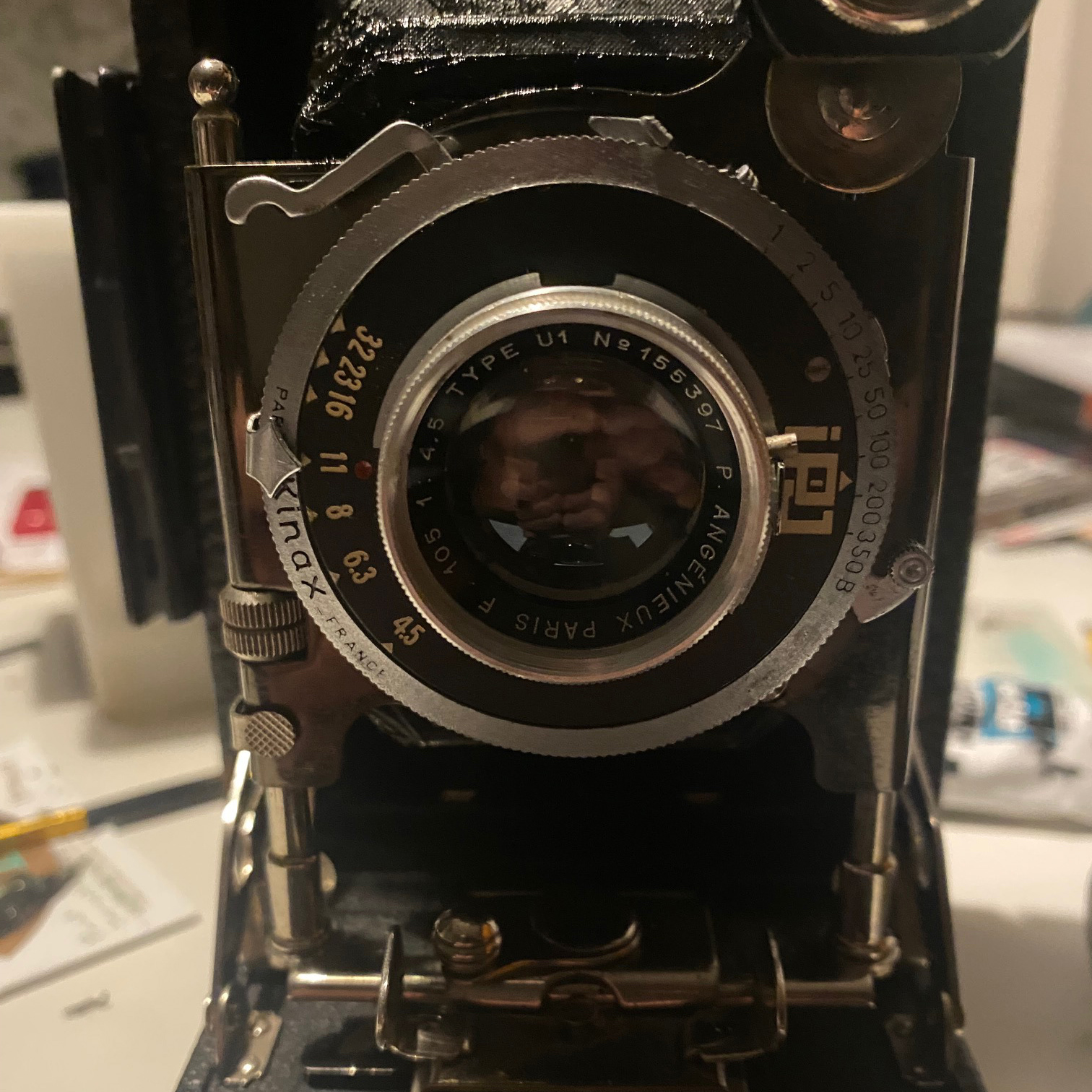
Vintage Kodak No. 3-A folding camera with replacement 105mm lens
Replacing the original lens and shutter
The original Kodak lens came with a shutter that was no longer working, so I replaced it with a 105mm lens from an old Kinax camera. My hope was that this lens would still provide enough coverage for the larger negative area needed for panoramic work.
When adapting a camera like this, one of the most useful steps is checking lens coverage before committing to the setup. By taping a piece of tracing paper or wax paper over the film gate, it becomes possible to create a simple temporary ground glass. That makes it much easier to see whether the lens covers the image area properly and to determine a new infinity focus point.
This kind of adjustment is part technical and part intuitive. It is not difficult, but it does ask for patience. I enjoy that part of the process. It turns the camera from a fixed historical object into something personal and workable.
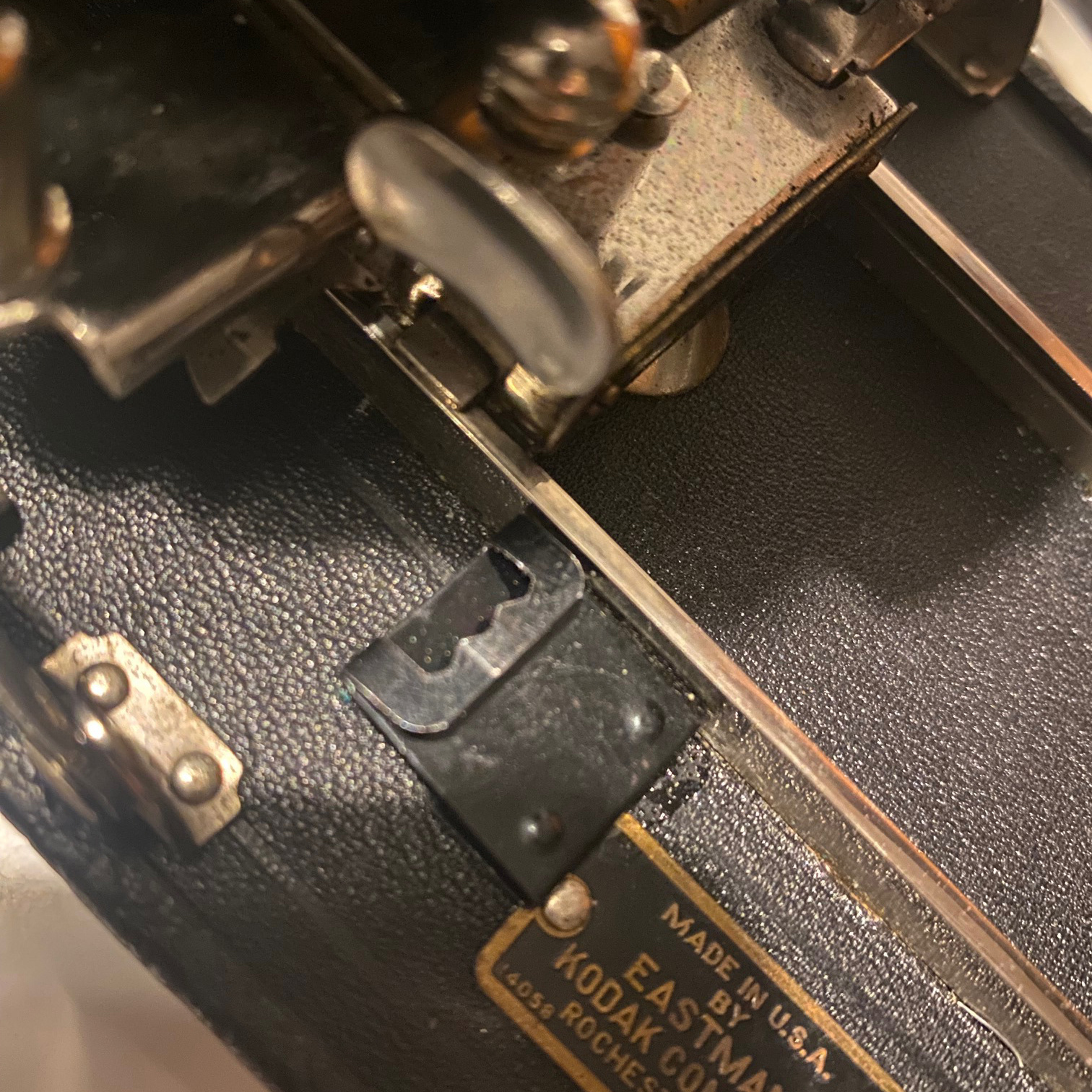
Infinity focus stop modification on Kodak No. 3-A Model C
Recalibrating focus for the new lens
Because of the lens replacement, the original focus position was no longer correct. To mark the new infinity focus point, I glued a small clip from a photo frame onto the ground plate as a stop. Now, when the lens is extended, it stops at the correct infinity setting for the new lens.
For now, infinity focus is enough for how I use this camera. Most of my interest with this setup is in panoramic work, where that fixed distance is often all I need. I may still add marks for closer focus in the future, but at the moment I enjoy the simplicity of working within one clear setting.
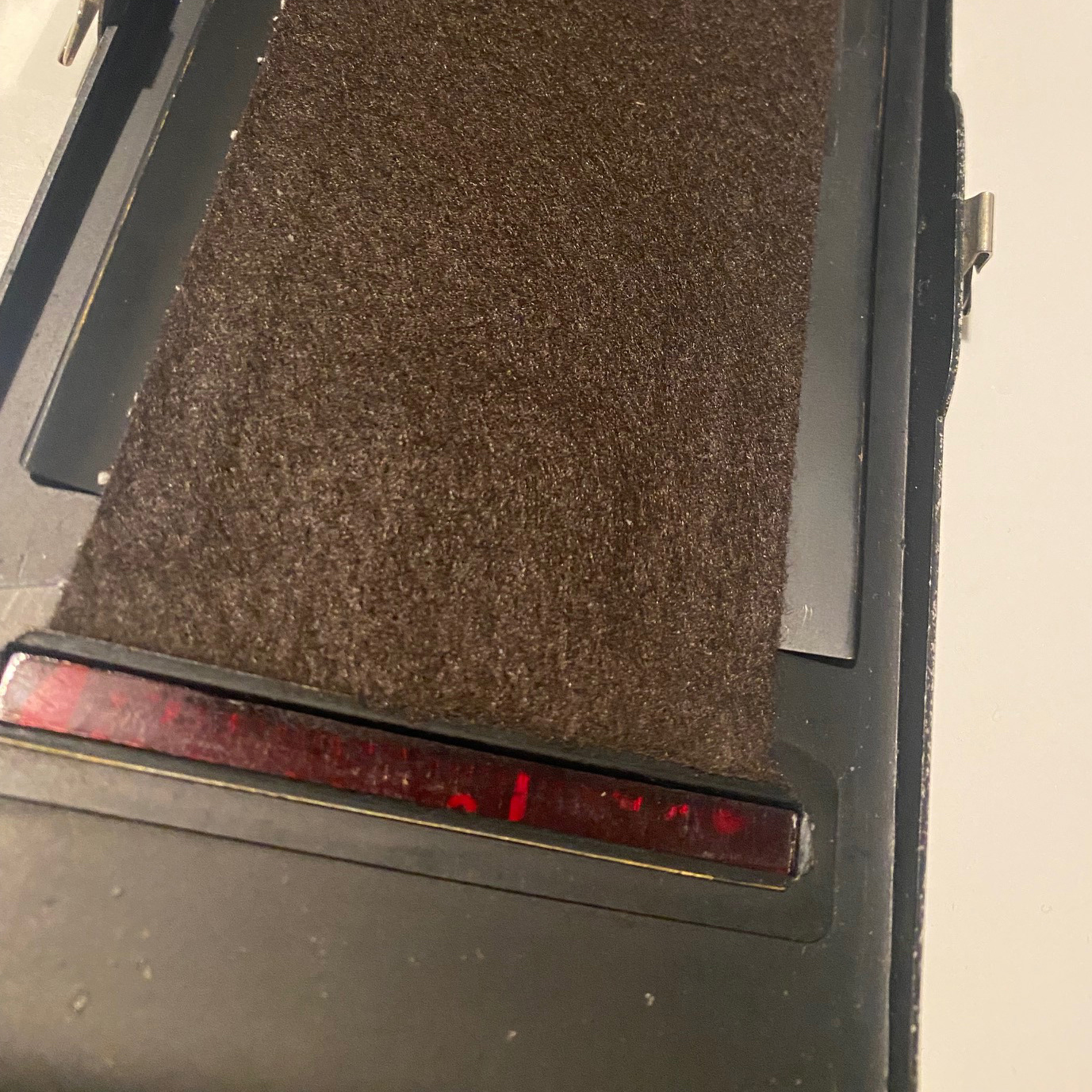
Camera back modification with felt and red window for 120 film
Camera back modifications
The camera back has no pressure plate, so I made a few simple changes to improve film handling. I glued some felt to the back to reduce the space between the film mask and the camera back, helping the film sit more securely in place.
I also added a transparent red sheet to the autographic window. That window is now used to read the frame numbers while advancing the film. It is a small modification, but one that makes the camera much more practical to use with 120 film.
These are not dramatic changes, but they matter. Vintage camera modifications often come down to small practical decisions that make the whole system workable.
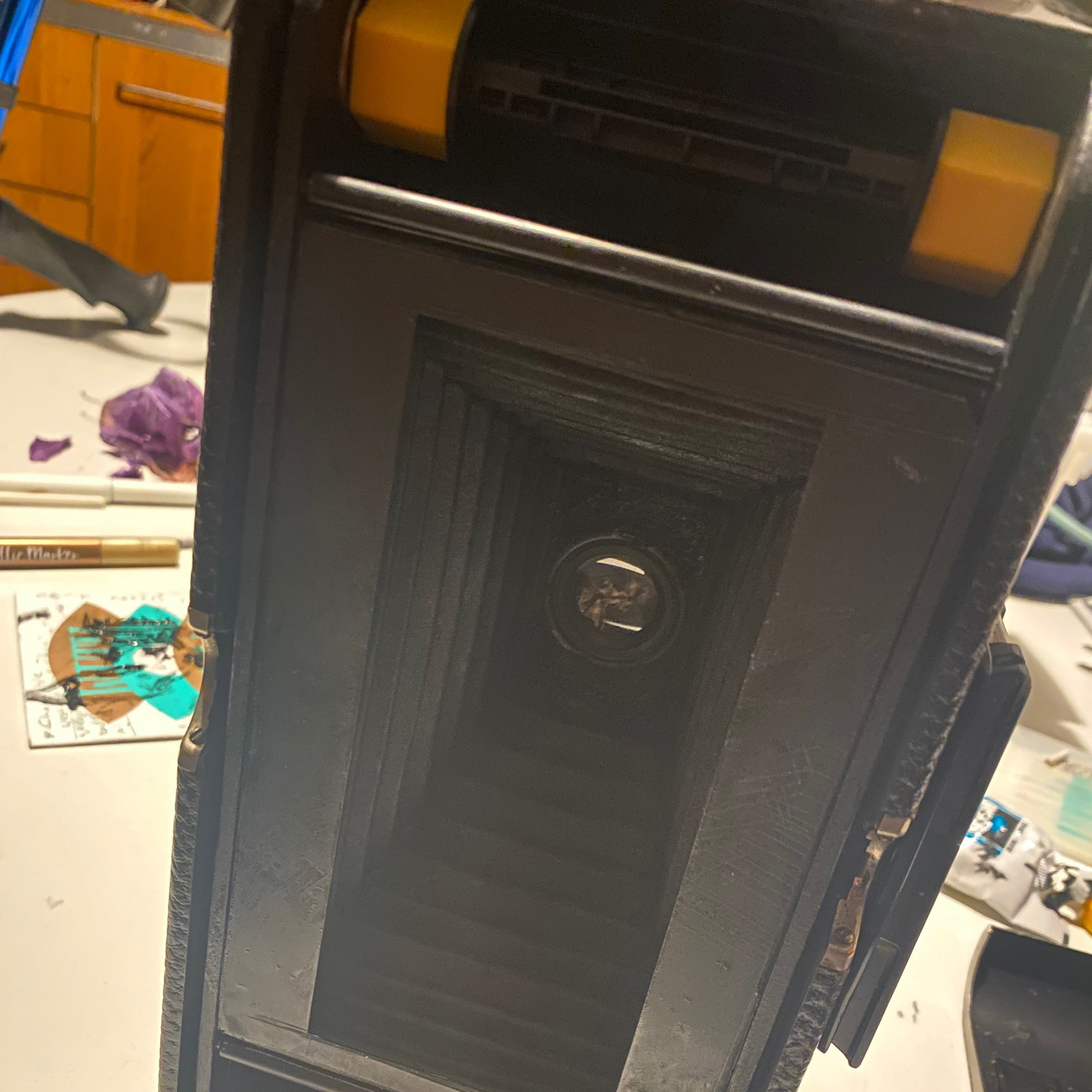
Acrylic film mask for Kodak No. 3-A 120 film panorama conversion
Film mask adjustments and 122 to 120 spool adapter
To fit 120 film properly, I made a smaller film mask from an acrylic sheet and painted it black. This helps define the image area and keeps the setup clean and controlled. I also use a 122 to 120 spool adapter, which I bought from camerhack.it in Italy.
With these adjustments in place, the Kodak No. 3-A Model C becomes a very enjoyable panoramic camera. It is still large, still a little unusual, and still clearly a product of another time, but that is exactly what makes it interesting.
Why I enjoy this conversion
What I like most about this modified Kodak No. 3-A Model C is that it combines invention with tradition. It remains unmistakably a vintage folding camera, but it now serves a very specific creative purpose. Instead of sitting on a shelf as a beautiful but impractical object, it becomes a working tool again.
I have always liked cameras that ask something of the photographer. Not in a frustrating way, but in a way that encourages attention and care. This camera does exactly that. It slows the process down, makes each frame feel intentional, and adds a tactile pleasure that is hard to replace.
For anyone interested in modifying vintage cameras, shooting 6x14 negatives, or exploring a more hands-on approach to panoramic film photography, the Kodak No. 3-A Model C is a fascinating camera to work with. It may not be the most obvious route into panoramas, but that is part of its appeal. It feels discovered rather than bought. Check this gallery for some panorama's made with this camera