
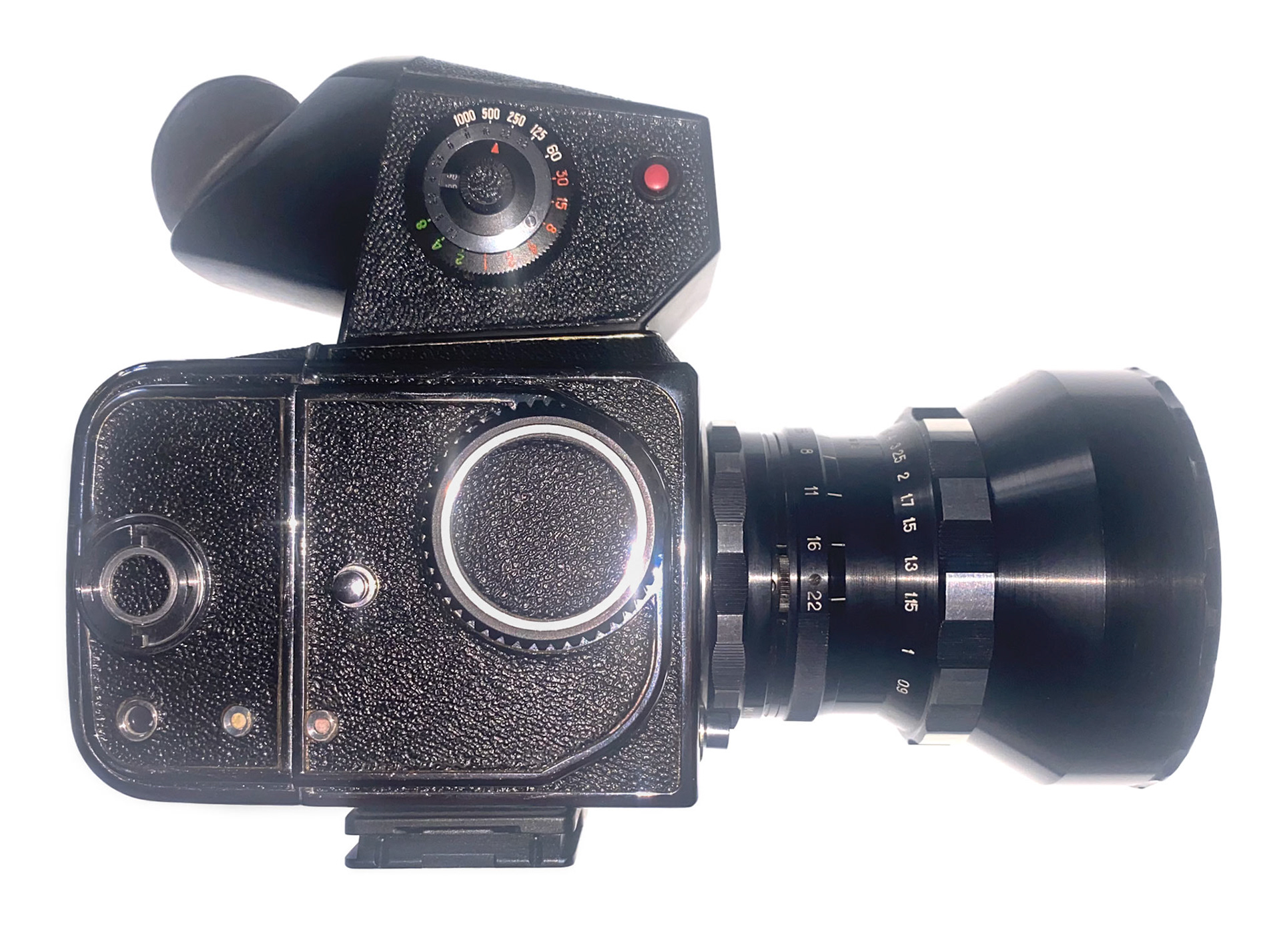
Kiev 88 with Mir-3 65mm lens
The Kiev 88 is one of those cameras that carries a reputation long before you ever load a roll of film into it. Often nicknamed the “Hasselbladski”, this Ukrainian 6x6 medium format camera is frequently compared to the Hasselblad because of its shape, modular design, and waist-level way of working. But whatever the comparison may be, the Kiev 88 has a character entirely of its own.
For me, it is a camera that feels solid, practical, and full of photographic possibility. It is not perfect, and it certainly asks for some patience, but that is also part of its appeal. In a world that often values speed and convenience, the Kiev 88 reminds me why I enjoy analog film photography so much: the physical process, the concentration, and the sense that each frame matters.
A 6x6 medium format camera built for a slower way of seeing
The Kiev 88 is an Ukrainian medium format film camera that shoots 6x6 negatives, and that square format changes the way I look. It encourages a different balance in composition and often makes me slow down just enough to pay closer attention.
I use the waist-level viewfinder when I want to stay light and work more intuitively, especially when photographing outside. It gives the experience a more open and tactile feeling. For portrait work in the studio, I usually prefer the TTL prism finder, which feels more direct and practical in that setting. Having both options makes the camera versatile, and it is one of the things I appreciate most about it.
Why I enjoy using the Kiev 88
The Kiev 88 is a real workhorse, and I genuinely love using it. It has a certain mechanical honesty that makes the act of photographing feel deliberate. Nothing about it is rushed. Every step asks for attention, and in return the camera gives a stronger sense of involvement in the process.
Part of the pleasure of working with older cameras is that they make photography feel physical again. You wind, check, compose, and release the shutter with intention. The camera becomes more than a tool; it becomes part of the rhythm of making the image. For photographers, collectors, and anyone drawn to the tactile qualities of film, that experience is often just as important as the final photograph.
My lenses for the Kiev 88
One of the pleasures of the Kiev 88 system is the range of lenses available. My lenses for this camera are:
• Volna-3 2.8/80 mm MC standard lens
• Mir-3 3,5/65 mm wide angle lens
• Carl Zeiss Jena Tessar 1:3,5 f- 105 mm T converted to Kiev-88 mount
• Arsat 3,5/30 mm Fish-eye lens
• Mir-3 3,5/65 mm wide angle lens
• Carl Zeiss Jena Tessar 1:3,5 f- 105 mm T converted to Kiev-88 mount
• Arsat 3,5/30 mm Fish-eye lens
• Jupiter-368 3,5/250 mm tele-lens
Each lens gives the camera a slightly different voice. The standard lens is a natural choice for general use, while the Mir-3 opens up the frame for wider scenes. The Tessar brings its own rendering, and the fisheye is there when I want something more unusual and expressive. Together they make the Kiev 88 a flexible camera for both portraiture and more experimental work.
Below are some pictures made with the Kiev 88
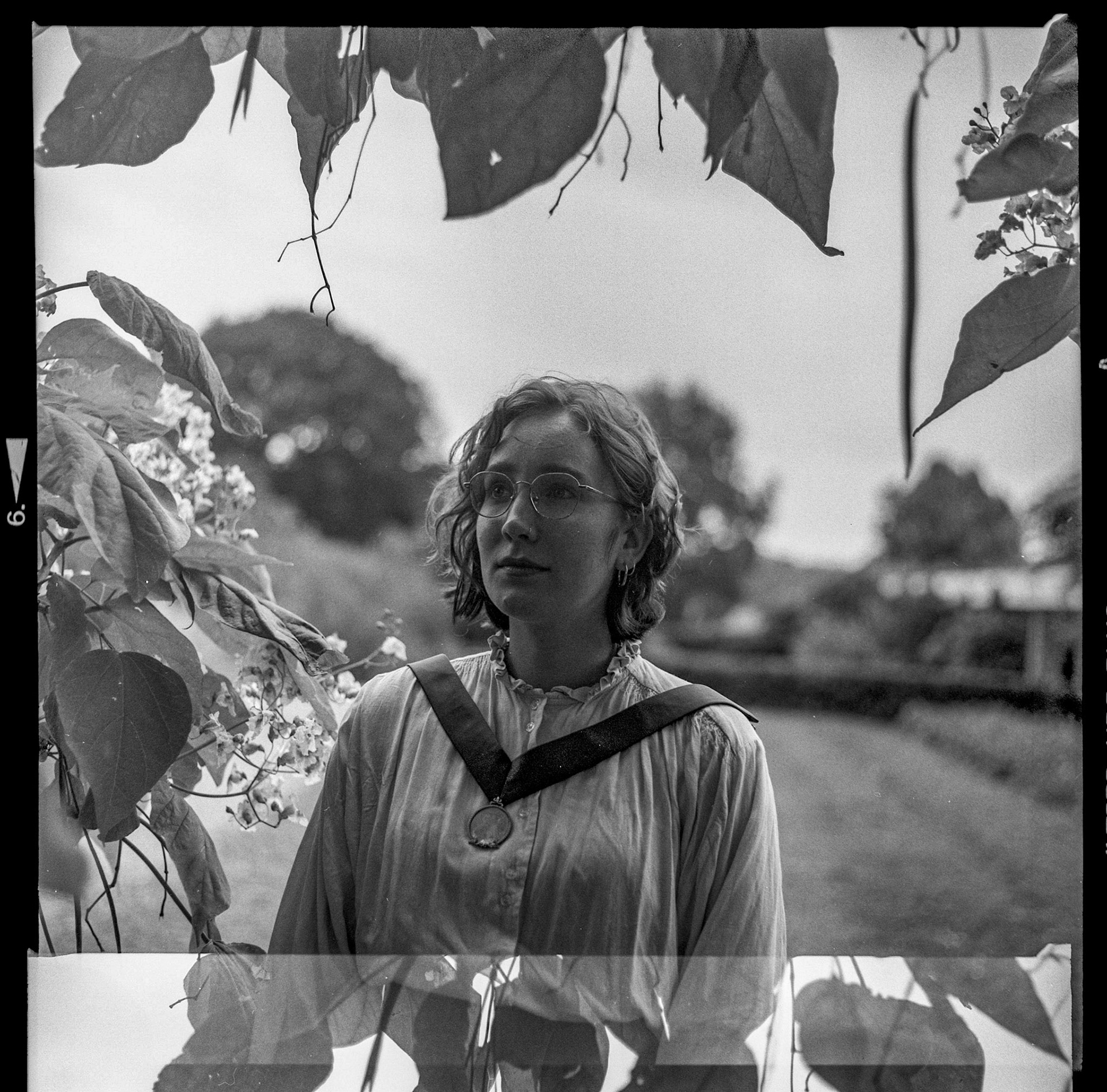
Not checking if the film advanced propperly results in overlapping negatives
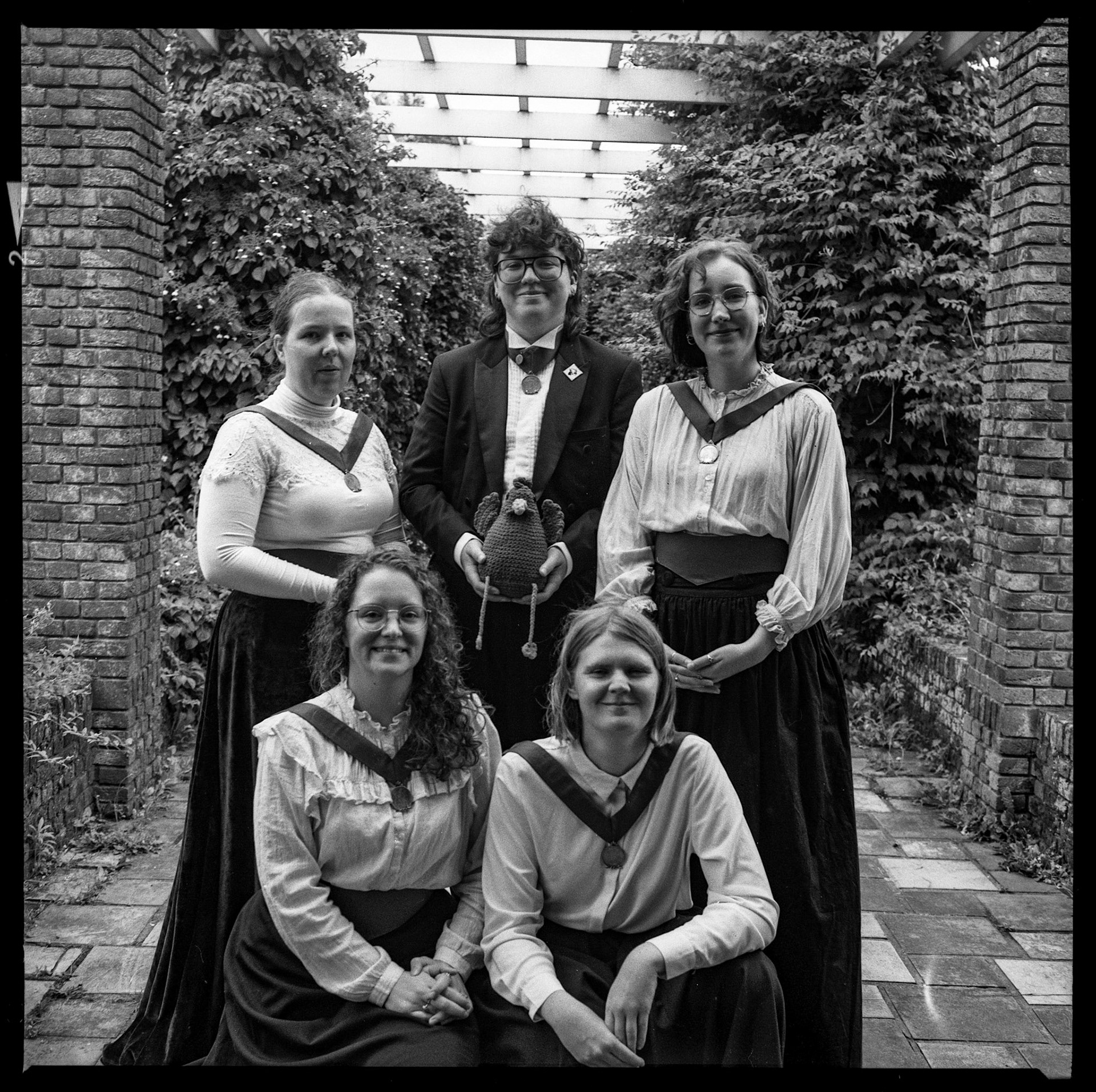
Groep portrait using the Kiev 88
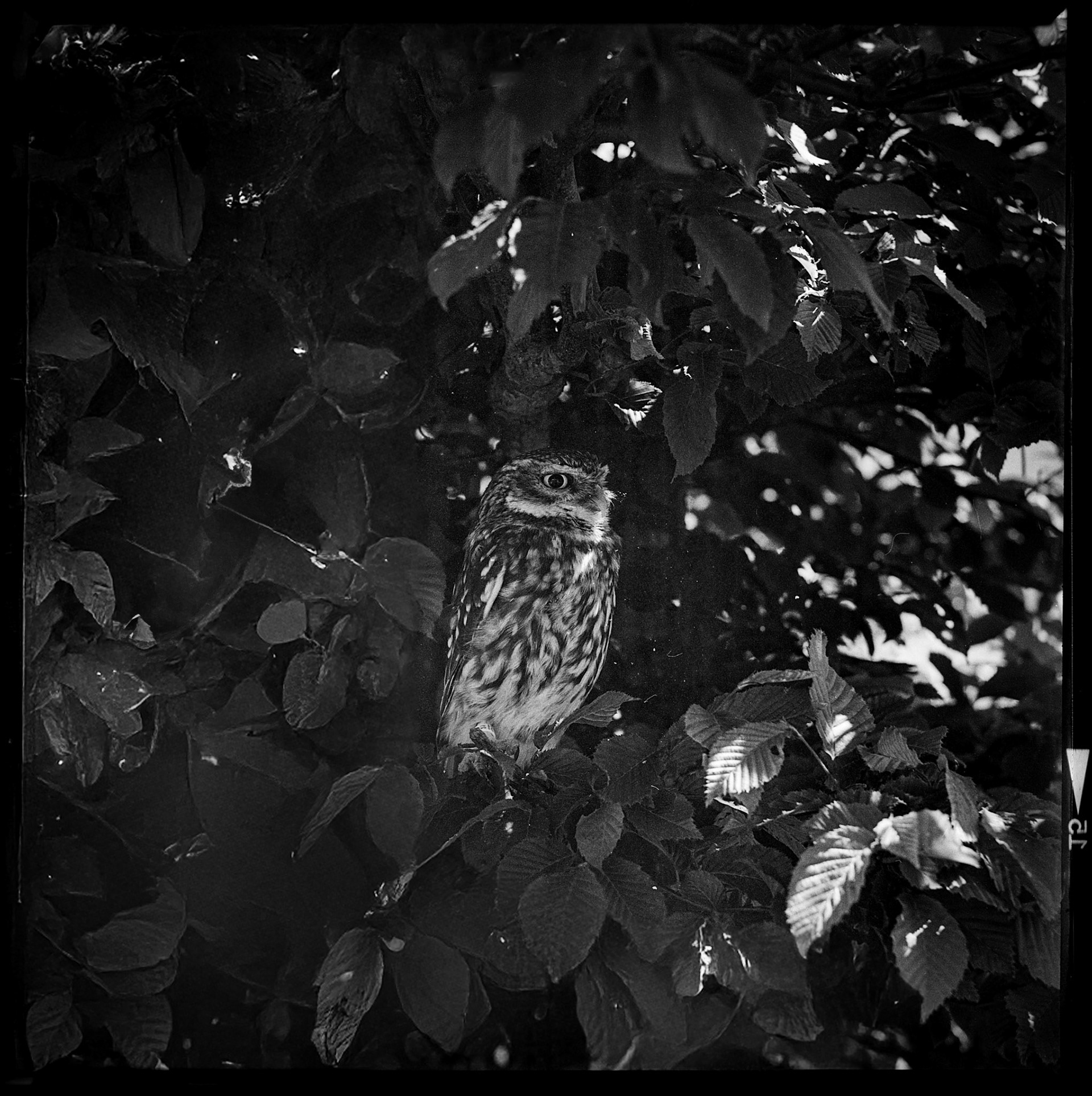
Owl in a tree taken with the Hasselbladski
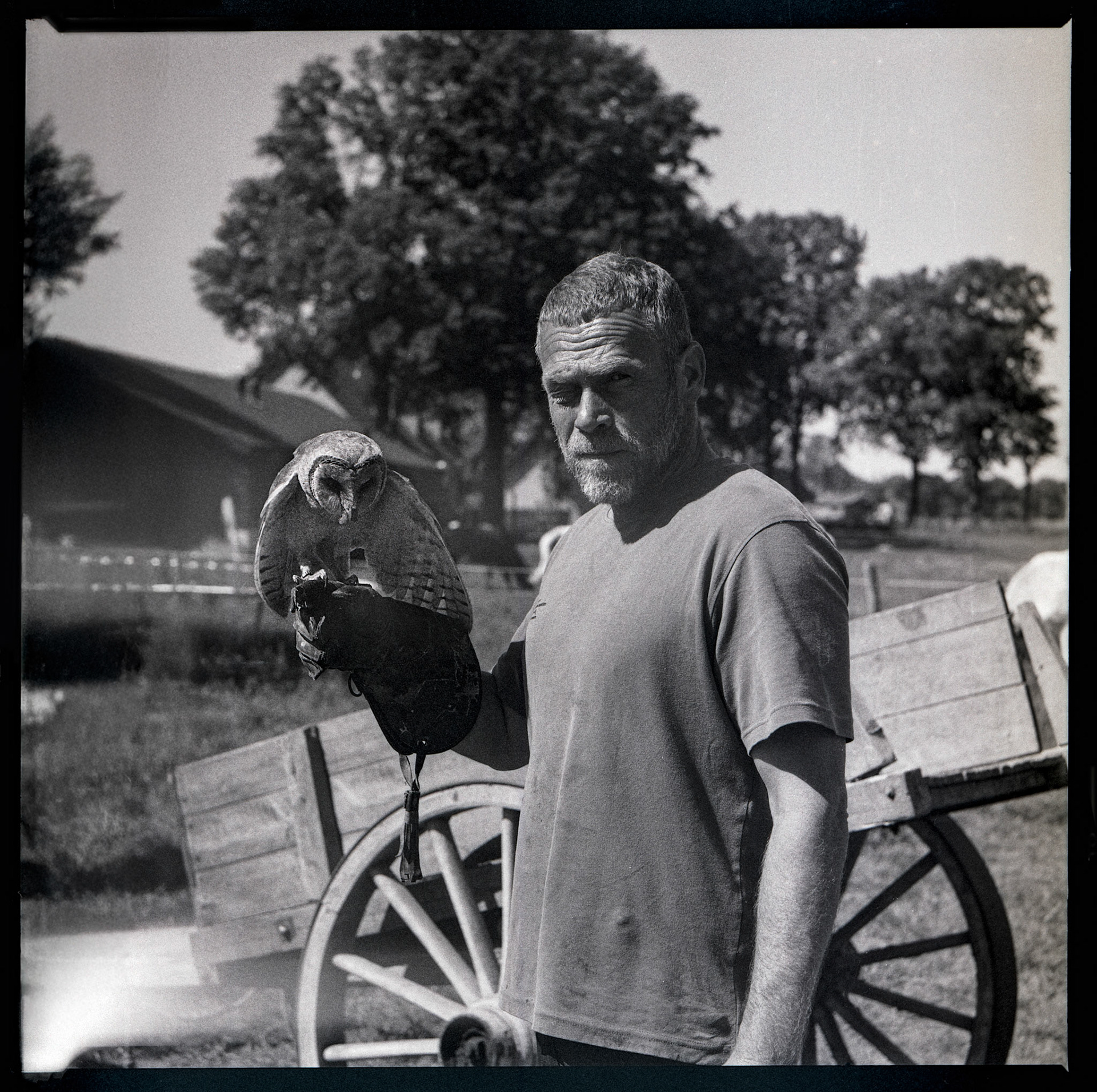
Portrait of a falconer with owl
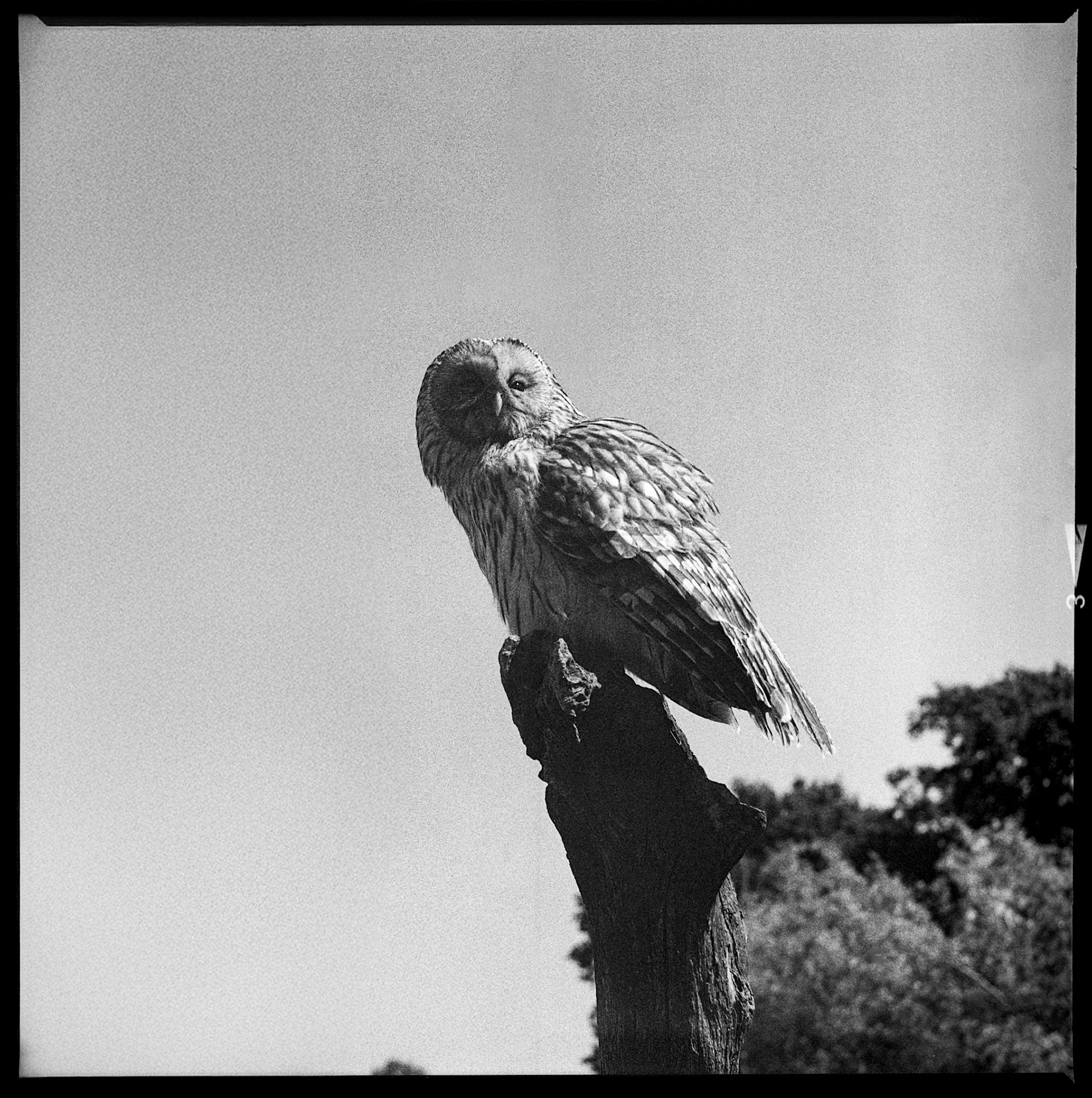
Owl on a branch photographed using the Kiev 88
Also my photo-series "End of the line" was shot using this camera.
A camera with character, and a few important habits
The Kiev 88 is a joy to use, but it is also a camera that expects you to learn its habits. Once you understand those, working with it becomes much easier.
One important rule is to set the shutter speed only after cocking the shutter. If you do not, the mechanism can be seriously damaged. With cameras like this, small routines matter, and respecting them is simply part of the process.
The film advance on my camera is also not always fully reliable. When winding on, I always check whether the next number on the backing paper is visible in the window on the back of the film holder. Quite often it needs a few manual turns to line up properly. It is a small extra step, but one worth taking.
If you skip that check, overlapping negatives can happen. That can be frustrating, but it also says something honest about the Kiev 88: this is not a camera that works well on autopilot. It rewards care. In that sense, it feels very true to the spirit of film photography itself.
The look of the negatives
When everything comes together, the Kiev 88 produces photographs with real presence. One of the details I especially like is the distinctive negative border, which gives the final image a strong material identity. It is a small thing, perhaps, but in fine art and analog work those details matter. They remind the viewer that the photograph is not just an image, but an object shaped by light, chemistry, and craft.
That tactile quality is part of what continues to draw people to film photography, whether they are photographers themselves, gallery visitors, or collectors looking for original photographic work. The Kiev 88 does not hide the process. It leaves traces of it, and I find that beautiful.
The Kiev 88 in practice
The photographs I have made with this camera include portraits, animals, and personal work, and it has served me well across all of them. A group portrait, an owl in a tree, a falconer with owl, and other images made with this camera all carry something of its visual character: a square frame, a strong presence, and a sense of deliberate making.
My photo series “End of the line” was also shot using the Kiev 88. That alone says a lot about the trust I place in it. For all its quirks, it is a camera I return to because it gives me something I value deeply: a feeling that the photograph has been made by hand, with patience and attention.
End verdict of the Kiev 88
The Kiev 88 is not a camera for everyone. It has its own logic, its own weaknesses, and its own demands. But that is exactly why it remains so compelling. It asks the photographer to slow down, learn its rhythm, and work with care. In return, it offers a deeply satisfying analog experience and negatives with real character.
For those interested in vintage cameras, medium format film photography, and the expressive possibilities of traditional photographic tools, the Kiev 88 remains a fascinating camera. It may be imperfect, but it is full of life, and sometimes that matters more than perfection ever could.