
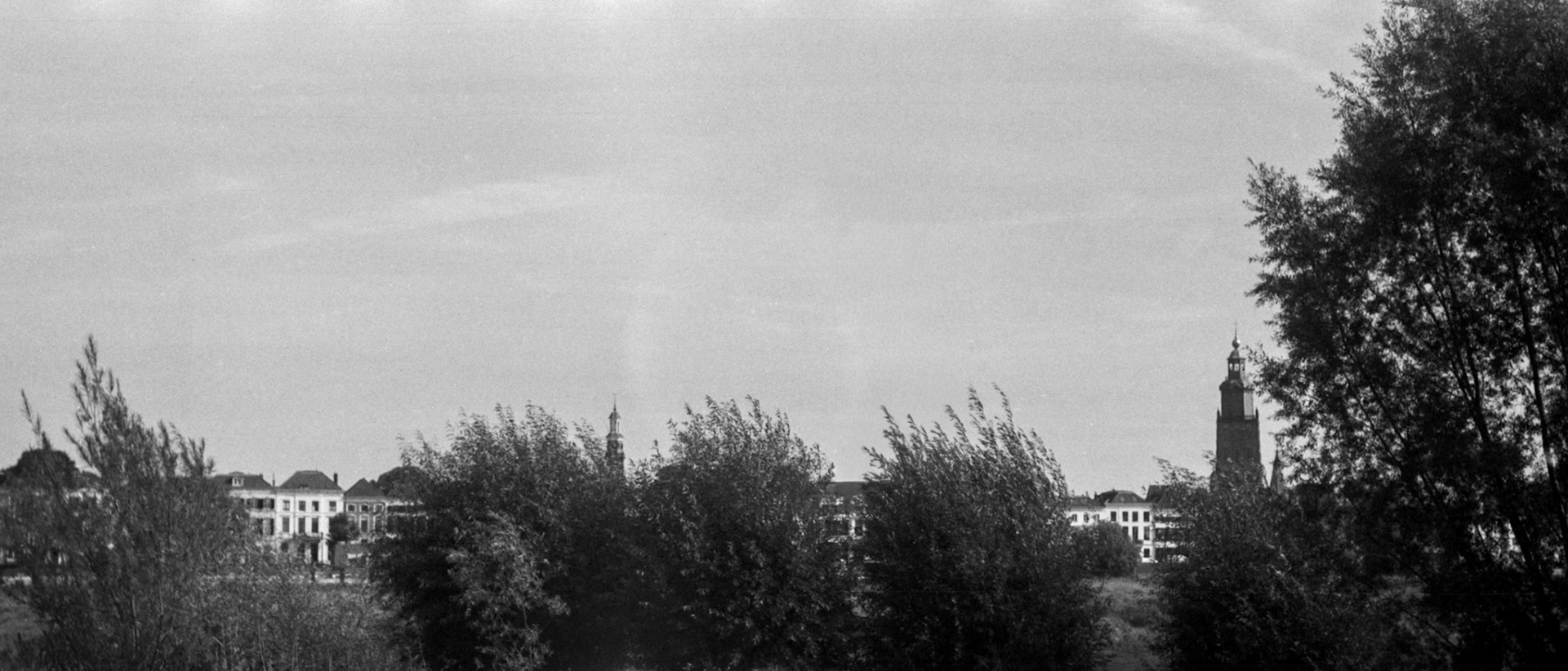
Panoramic skyline photograph made with the Franka Solida III on 35mm film
The Franka Solida III is a medium format folding camera made around 1954 by Franka Kamerawerk in Bavaria, Germany. Cameras like this have a way of slowing everything down. They ask for a little more patience, a little more care, and in return they offer an experience that feels deeply connected to the roots of photography. That is part of what makes the Franka Solida III so appealing to me.
For anyone drawn to analog film photography, vintage craftsmanship, and the tactile beauty of older cameras, the Franka Solida III is a wonderful object in itself. But beyond its looks, it is also a camera that invites a thoughtful way of working. It is not only about the final image. It is also about the process, the handling, and the quiet satisfaction of making photographs with something mechanical and enduring.
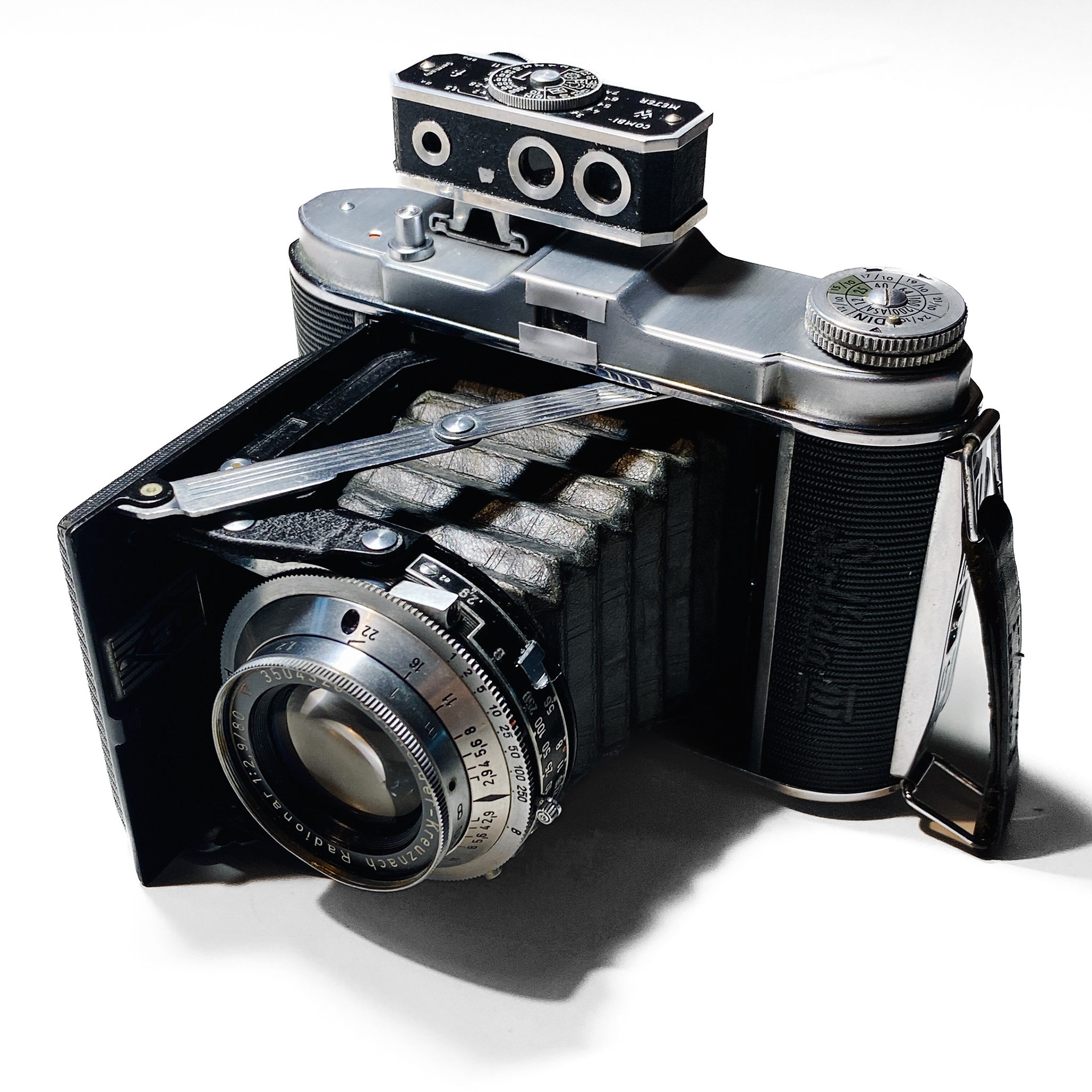
Franka Solida III medium format folding camera from the 1950s
A 1950s medium format folding camera
The Franka Solida III is a medium format folding camera designed for 120 roll film, producing 6x6 cm square negatives. That square format has always felt balanced and calm to me. It encourages a different way of composing, one that feels less hurried and more deliberate than the rectangular formats we often default to today.
What I especially enjoy is that this camera is not limited to 120 film alone. I also use it regularly with a 35mm film adapter, which allows me to shoot panoramic images on 135 film. For anyone curious about experimenting with film in a more playful way, this is one of the simplest and most enjoyable methods. Using a 120 camera for 35mm panoramas brings an extra layer of surprise and character that suits the spirit of analog photography beautifully.
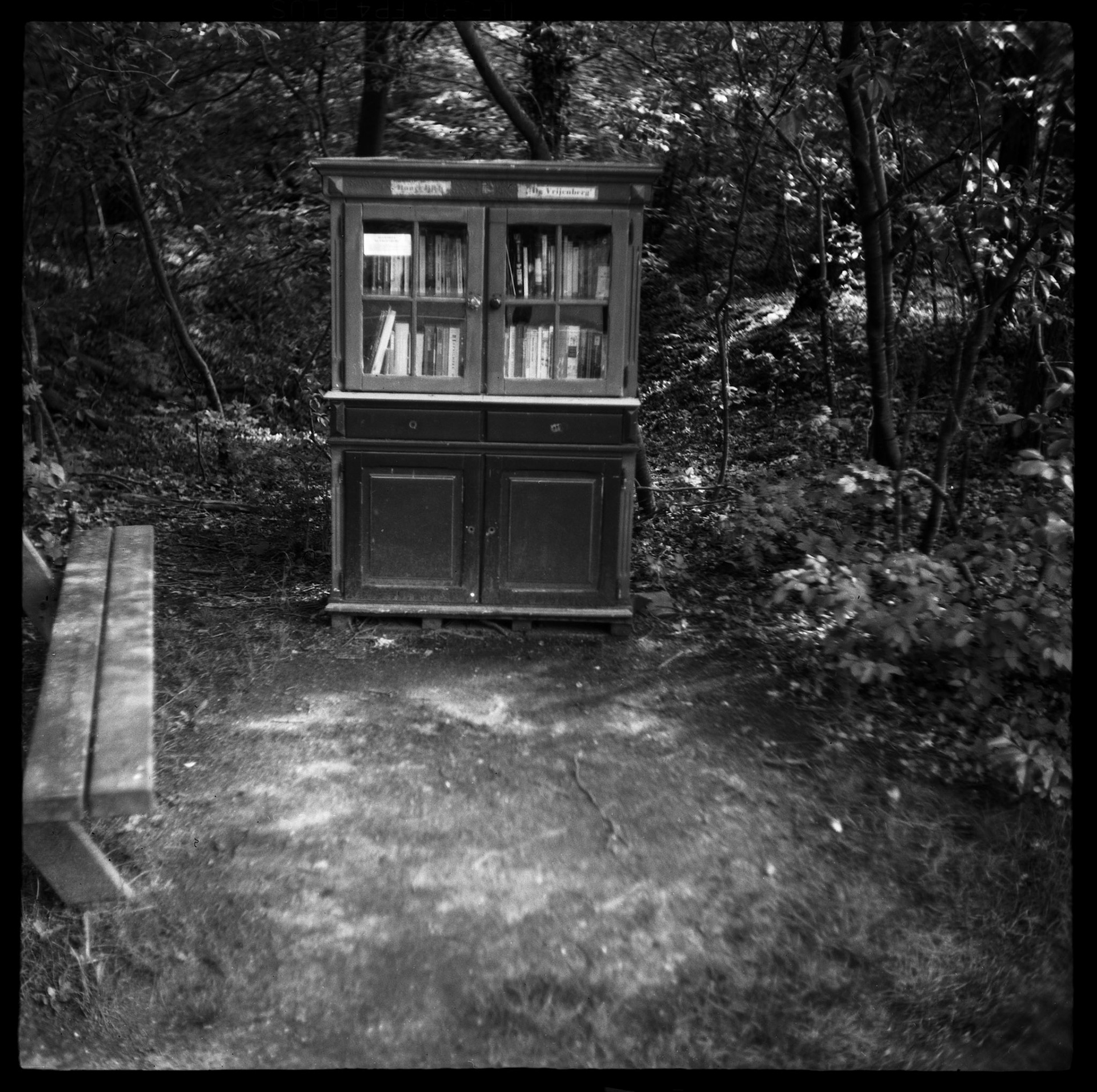
Shot using Schneider Kreuznach Radionar lens on Franka Solida III folding camera
Shooting panoramas with the Franka Solida III
One of the reasons I keep returning to this camera is its flexibility. With a 135 to 120 film adapter, the Franka Solida III becomes a surprisingly enjoyable tool for panoramic photography. It is a simple setup, but the results can feel expansive and cinematic, especially when paired with slower black and white film. Here you can find some examples shot with this camera.
There is something satisfying about using an older medium format film camera in a way that was never quite standard. It adds a sense of experimentation without losing the craftsmanship and tactile qualities that make vintage cameras so rewarding to use.
Schneider Kreuznach Radionar 80mm f/2.9 lens
The Franka Solida III is fitted with an 80mm Schneider Kreuznach Radionar lens, with a maximum aperture of f/2.9 and stopping down to f/22. The Radionar was considered a more affordable three-element lens in its time, which means this camera is often seen as less collectible than folding cameras from Zeiss Ikon or Voigtländer.
Still, that does not tell the whole story.
What I appreciate about this lens is not perfection, but character. Wide open, it can be a little softer, but that softness can work beautifully in the right setting. Stop it down a little, and it becomes a strong performer with a look that feels distinctly filmic rather than clinical. For photographers and collectors who value personality over technical perfection, that matters.
One curious detail I noticed is that the camera does not fold closed when the lens is set to a shorter focus distance. Before closing it, the lens needs to be turned back toward infinity focus so it fits properly into the body. It is a small quirk, but one that becomes part of the camera’s personality. Vintage cameras often ask us to learn their habits, and I find that part of their charm.
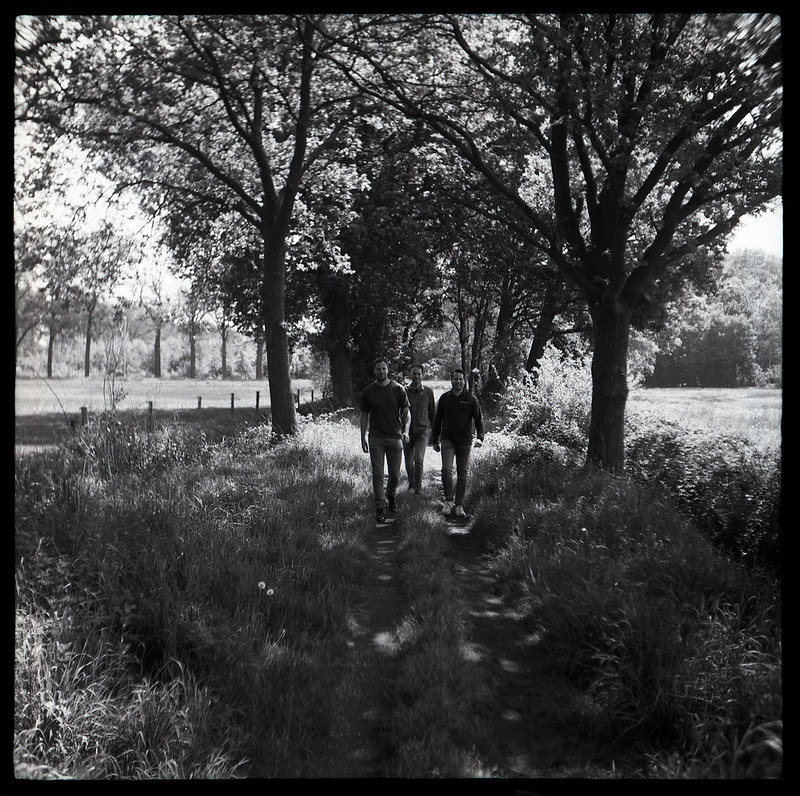
Black and white hikers photo taken with Franka Solida III and Ilford FP4 Plus
Shutter and handling
The Franka Solida III is equipped with a Prontor-S leaf shutter, offering speeds from 1 second to 1/250 sec, plus Bulb mode. In practical use, it feels reliable and straightforward.
One feature I genuinely like is the shutter release placement. It is positioned on top of the camera, where most modern photographers would instinctively expect it. That may sound like a small thing, but it makes the camera more comfortable and intuitive to use. Unlike some folding cameras with tiny shutter levers on the lens, this design feels natural in the hand.
That ease of use matters. A camera can be technically interesting, but if it does not feel inviting, it tends to stay on the shelf. The Franka Solida III, despite its age, feels like a camera that wants to be used.
Image quality and experience
After shooting several rolls with this camera, I have come to see it as a very capable companion. In absolute sharpness, it does not quite match my Zeiss Ikon folding cameras. But sharpness is only one part of what makes an image meaningful.
What the Franka Solida III offers is a combination of usability, lens character, and a slightly faster aperture that gives a bit more flexibility in available light. That extra half stop is welcome, even if the rendering wide open is a touch softer. In many situations, especially in black and white film photography, that softness contributes to the mood rather than taking away from it.
This is the kind of camera that reminds me why I continue to love analog photography. It slows the process, encourages attention, and rewards patience. The photographs feel made rather than captured. For me, that difference is important.
Why the Franka Solida III still matters
For collectors, the Franka Solida III may not be the most famous vintage medium format camera, but that is part of its appeal. It sits slightly outside the usual spotlight, which makes discovering its strengths all the more rewarding. For photographers, it offers a tactile and thoughtful shooting experience. And for those interested in fine art film photography, it provides a visual language shaped as much by process and imperfection as by precision.
I think that is why cameras like this continue to matter. They connect us not only to photographic history, but also to a slower and more attentive way of seeing. The Franka Solida III may not be the most celebrated folding camera of its era, but it is one I enjoy returning to, and one that continues to surprise me in quiet, meaningful ways.