
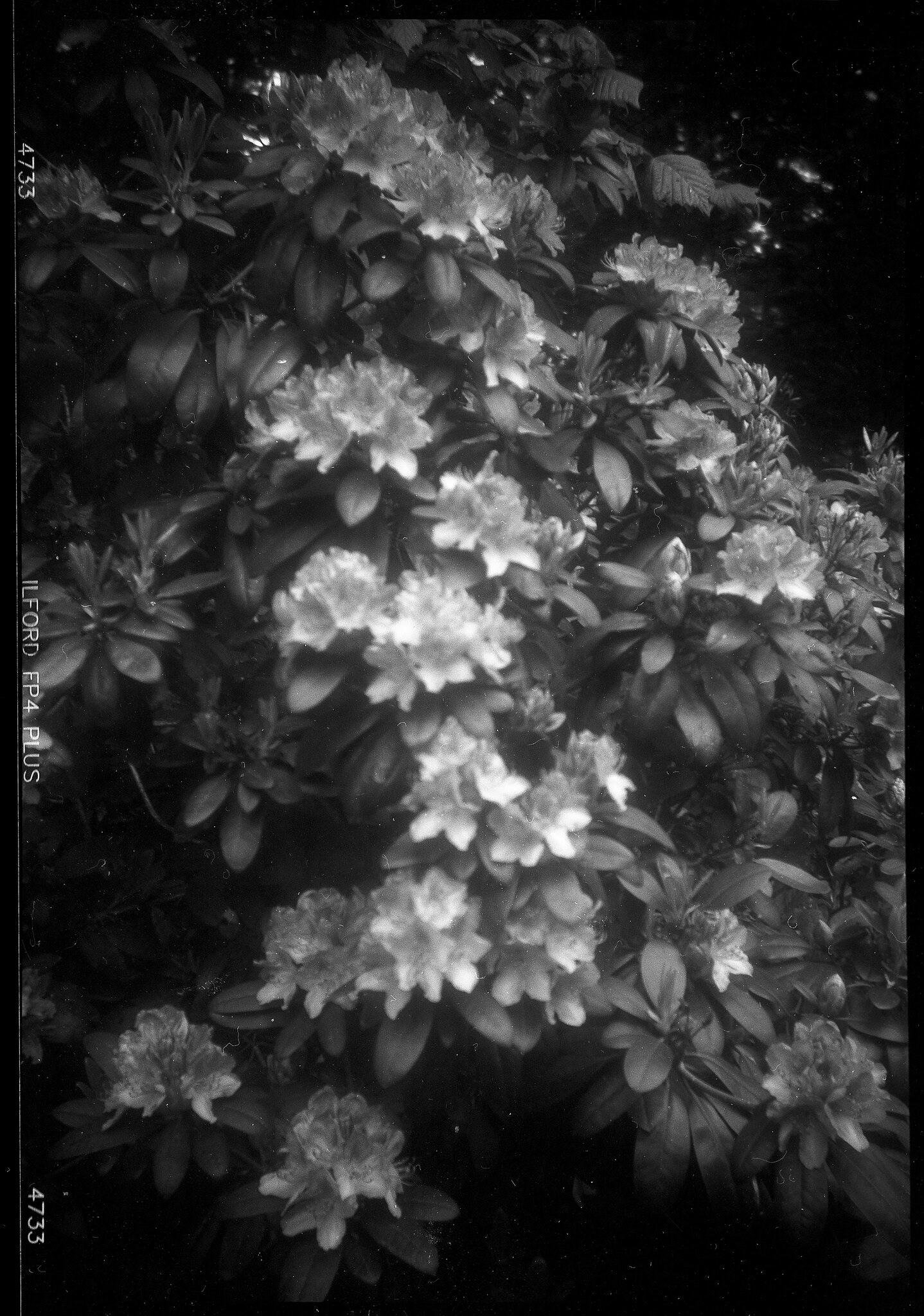
Flowers close up
The Kodak Brownie Flash II is one of those cameras that quietly wins you over. It does not impress with technical sophistication, and it certainly does not offer the kind of control many photographers are used to today. Yet that is exactly what makes it so appealing. There is something honest about working with a camera that asks you to slow down, accept its limits, and pay closer attention to light, distance, and composition.
For anyone drawn to analog photography, vintage cameras, or fine art film processes, the Brownie Flash II offers a small but meaningful reminder of where photography began for so many people: simple tools, careful observation, and the excitement of waiting to see what the film reveals.
Why the Kodak Brownie Flash II still matters
Introduced as an affordable camera for everyday photographers, the Kodak Brownie Flash II reflects Kodak’s original promise to make photography accessible. It was built to be straightforward and dependable. That straightforward design is still part of its charm today.
Using the Brownie Flash II feels very different from using a modern digital camera. There are almost no settings to think about. No menus, no autofocus, no exposure modes. The focus is fixed, the aperture is fixed at around f/11, and the shutter speed sits at roughly 1/60 second. In practical terms, that means the camera asks you to work within its world rather than forcing the image into yours.
I find that limitation surprisingly refreshing. Instead of adjusting settings, I pay more attention to where I stand, how the light falls, and whether the subject belongs in the frame at all. In that sense, the Brownie Flash II becomes more than a camera. It becomes a quiet lesson in seeing.
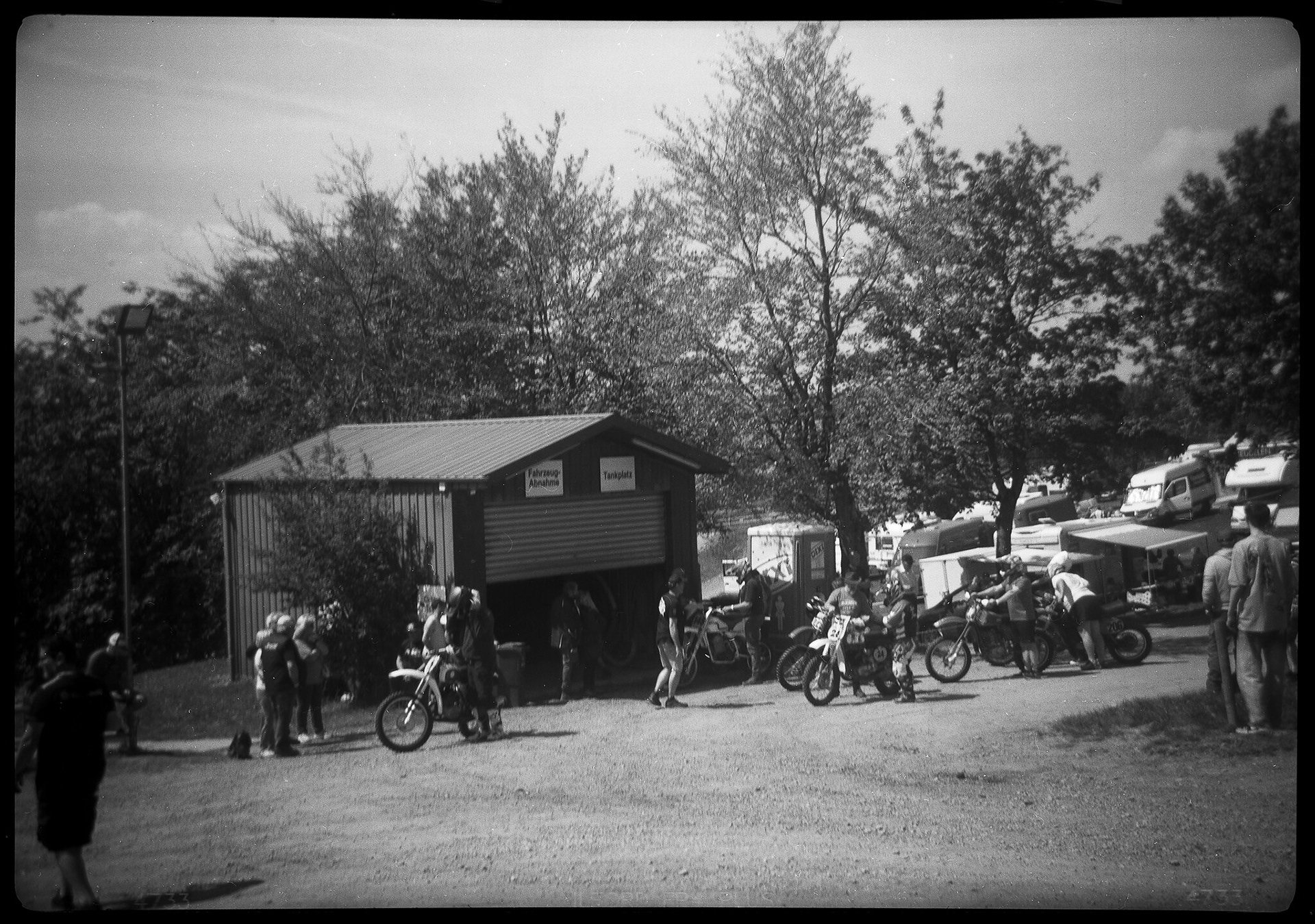
MX Motor inspection
Shooting 620 film and the 6x9 experience
One of the more unusual aspects of the Brownie Flash II is its use of 620 film. That format is less common today than 35mm or 120 film, which can make it feel slightly impractical at first. Fortunately, 120 film can often be respooled onto 620 spools, making it possible to keep these cameras in active use.
The reward is the large 6x9 negative. You only get eight exposures on a roll, but each frame feels generous. There is a tactile satisfaction in knowing that every shot matters. For collectors, analog enthusiasts, and gallery visitors who appreciate the material quality of film, that large negative is part of the camera’s enduring appeal. It carries a presence that feels very different from the endless stream of digital images we produce today.
A camera that encourages deliberate photography
The Brownie Flash II has a fixed-focus lens that is sharpest from around six feet to infinity. On paper, that sounds restrictive. In practice, it becomes part of the creative process. You begin to think more carefully about placement, distance, and composition before pressing the shutter.
That kind of deliberate approach is one of the reasons I remain drawn to analog photography. Film has a way of making each frame feel earned. With a camera like this, there is very little room for correction after the fact. What matters is attention in the moment.
For photographers interested in traditional methods, or for art buyers who value authenticity and process, this is part of the beauty. The image is shaped not only by the subject, but by the character and limitations of the tool itself.
The close-Up lens
One feature the Brownie Flash II does offer is a close-up lens that can be activated by pulling a small lever. This slides an additional lens behind the main lens. It is a clever piece of design, and I was curious to try it.
My own attempt did not quite succeed. I missed focus, though I suspect that was at least partly due to camera movement. The shutter release sits on the side of the camera and requires a fairly deep press, which makes it difficult to avoid shifting the camera slightly at the moment of exposure.
Oddly enough, I do not mind that imperfection. Cameras like this remind me that photography is not always about precision. Sometimes it is about the small unpredictabilities that make an image feel personal. There is room for trial, error, and the occasional near miss.
Brownie Flash II image quality and vintage character
Given its age and simple optics, the image quality of the Brownie Flash II is better than many people expect. In good daylight, the fixed aperture and shutter speed work together well enough to produce usable negatives with a very distinctive look.
The photographs tend toward softness rather than clinical sharpness. There is often a gentle, slightly dreamy rendering that suits flowers, quiet details, and everyday subjects remarkably well. For those interested in fine art photography, that softness is not a flaw to be corrected but a visual quality to be appreciated. It gives the images a sense of atmosphere and memory.
This is one of the reasons vintage cameras continue to attract both photographers and collectors. They do not simply record a scene. They interpret it.
My experience using the Brownie Flash II
What I appreciate most about the Brownie Flash II is not its versatility, because it has very little. It is the way it strips photography back to essentials. It asks for patience. It asks for acceptance. And it rewards a slower, more reflective way of working.
At the same time, I have to be honest: for my own practice, it also feels incomplete. I miss having more control over exposure. I miss the ability to respond more precisely to changing light. So while I admire the Brownie Flash II and genuinely enjoy using it, I will probably continue to reach for cameras that offer a bit more flexibility.
Still, I am glad to have spent time with it. It reminded me that photography does not need to be complicated to be meaningful. Sometimes a simple box camera, a roll of film, and a little patience are enough.
Final thoughts
For vintage camera collectors, analog photography enthusiasts, and anyone interested in the tactile beauty of film, the Kodak Brownie Flash II remains a charming and worthwhile camera. It is not perfect, and it is not for every situation. But it carries a sincerity that is hard not to admire.
If you are curious about traditional photographic techniques, or if you simply enjoy the character that older cameras bring to an image, the Brownie Flash II offers a gentle invitation to slow down and see differently.